
The Ozone Machine for Household Disinfection I Didn’t Know I Needed
Friend, most people hear “ozone machine” and think of one thing: cleaning produce. That’s actually how I found MINE too, a family member on a produce-washing kick led me straight to one. But the deeper I got into using it, the more I realized this little machine does so much more than rinse berries, it’s genuinely one of the more versatile tools for household disinfection I own, and I think it deserves a real introduction, not just a produce footnote.
So let’s talk about what ozone actually is, what it can do around your whole home, and yes, why washing your produce well has been on all our minds lately too.
What Ozone Actually Is
Ozone is just oxygen, three atoms of it instead of the usual two. That’s the whole chemistry lesson, but it matters: normal oxygen (the two-atom kind we breathe) is stable and calm. Ozone gas is reactive and a little aggressive, which is exactly why it’s such a powerful method of odor elimination and disinfection in the first place.
Ozone machines create this gas one of two ways, either an electrical discharge (mimicking what happens naturally during a thunderstorm, which is why the air smells so clean afterward) or UV light. Both approaches produce genuine ozone technology capable of attacking odor-causing compounds and organic materials at a molecular level, then breaking back down into normal oxygen once the job is done. Nothing lingers behind.
One quick clarification worth making, since it comes up: the ozone your household machine produces is not the same conversation as ground level ozone you might hear about in air quality reports, that’s an unwanted pollutant formed by a totally different process, and long-term exposure to that kind of ambient ozone is a real environmental health topic on its own. What we’re talking about here is a controlled, intentional, short-duration ozone exposure inside your own home, for a specific purpose, then it’s gone. Different context, different conversation.
The Big One: Odor Elimination
This is where ozone machines really shine, and it’s honestly the use case I didn’t expect to love as much as I do. Unwanted odors, smoke smells, pet odors, that lingering “why does this room smell like this” mystery, are usually caused by organic compounds and particles that conventional air fresheners just mask instead of actually removing.
Ozone doesn’t mask anything. It attacks the odor-causing compounds directly, breaking down the molecules responsible rather than covering them with a stronger smell. That’s the difference between a fresh smelling room and a room that just smells like artificial “fresh linen” spray sitting on top of the actual problem.
Think about the smells that never quite go away no matter how many candles you burn, a musty basement, a room that held onto smoke odor from years ago, the lingering smell after cooking fish or something equally strong. Those are usually deeply embedded organic compounds, not surface-level smells, which is exactly why spraying something over them never actually works. Ozone gets into that same air space and breaks the source down instead of hiding it.
One important, honest safety note here, this is the kind of thing I want you to actually know, not just the marketing version. High concentrations of ozone used for a real “shock treatment” (the kind meant to fully clear a tough smoke or pet odor from a room) require the space to be unoccupied during treatment. This isn’t optional caution, it’s a real permissible exposure limit issue, breathing in high concentrations of ozone can cause respiratory irritation, and in more extreme or prolonged exposure, real symptoms like chest pain. Treatment time and treatment area both matter here: a small machine treating a room for a set period, with nobody in it, then airing out afterward, is the safe and correct way to use ozone for this kind of odor elimination. This is different from the smaller-scale water treatment I use for produce, which doesn’t require clearing the room at all.
I say all this not to scare you off the tool, I genuinely love mine, but because credibility matters to me more than a glossy sales pitch. Used correctly, it’s a remarkably effective, real method for tackling odors most sprays never actually solve.
Water Purification and Ozonated Water
Ozone is also a legitimate tool for water purification. Ozonated water, water that’s been treated with this same reactive gas, is used in everything from municipal water treatment to the produce-washing use I started with. The ozone acts as one of the most powerful oxidizing agents available, breaking down contaminants and even affecting bacterial cell walls directly, going after nucleic acids in a way that genuinely disrupts what it comes into contact with, which is part of why it’s such an effective disinfection method more broadly, not just for smells, but for what’s actually living on a surface or in water.
This isn’t a fringe idea, either. Government agencies and water treatment facilities have relied on ozone water treatment for decades, long before home versions of this technology became accessible. What’s changed is that a version of this same real science is now small and affordable enough to sit on a kitchen counter, which is honestly part of why I trust it, this isn’t a new, unproven gimmick, it’s a smaller-scale application of something already well established.
Back to Where I Started: Food Prep and Produce
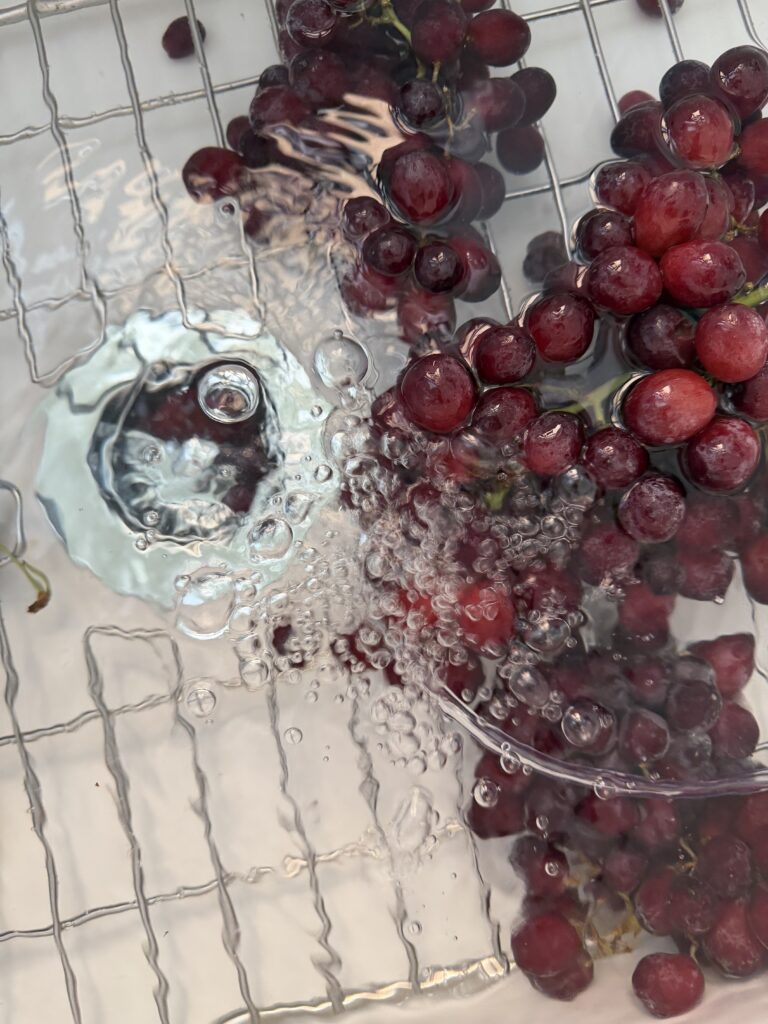
Here’s the part that’s probably why you’re actually here. Between recent headlines about produce-related illness, I think we’re all a little more acutely aware than we used to be that we need to be washing our produce well. That awareness alone is a good thing, even if no single tool solves everything.
At food prep stations, ozone genuinely earns its place. It’s effective against a wide range of organic materials and organic compounds sitting on produce surfaces, including common concerns like E. coli, and it does this without leaving chemical residues behind the way some other treatments can. That’s the whole appeal for me: real disinfection, without adding something new to worry about afterward.
I’ll be honest that this was the use case that got me in the door, and it’s still part of our weekly routine, but it’s no longer the only reason the machine earns its counter space. If you’re coming to this purely for the food safety angle, that’s a completely valid reason to start, just know there’s more here once you do.
How We Actually Use It, Day to Day
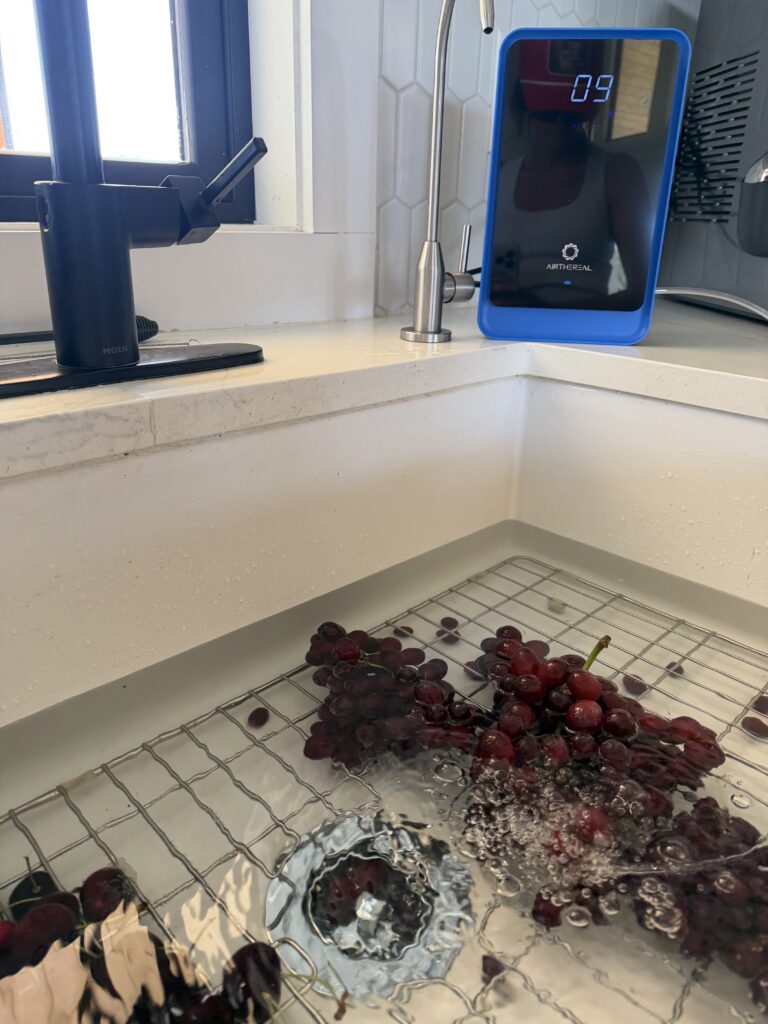
Nothing complicated, and that’s honestly part of why it’s stayed in rotation instead of becoming one of those gadgets that gets used twice and shoved in a cabinet. For produce, it’s part of our regular routine, water fills up, produce goes in, the machine runs its cycle, we drain it and move on with dinner. For odor treatment, it comes out far less often, only when we genuinely need it, a particularly strong cooking smell, a musty smell after opening up a room that’s been closed for a while, that kind of thing. It’s not a daily whole-house treatment, it’s a targeted tool for when something specific needs addressing.
Indoor Air Quality, the Quiet Benefit
Beyond active odor treatments, ozone machines can play a role in general indoor air quality, helping address unwanted particles and airborne organic compounds circulating through a room. This isn’t a replacement for a good air filter (I still use and love mine for that specific job, air purifiers and ozone machines solve genuinely different problems and work well as a pair, not a substitute for each other), but it’s a nice complementary layer, especially in a space that’s dealt with smoke, cooking odors, or just needs a real reset.
If you’ve ever walked into a room and thought “something in here just feels stale,” that’s usually a real, physical buildup of particles and compounds in the air, not just an impression. A short, targeted ozone treatment in an unoccupied room, followed by proper airing out, can genuinely shift that. It’s one of those small, doable steps toward a less toxic home that doesn’t require ripping anything out or spending a fortune, just using a tool you may already have, correctly.
What to Actually Look For
If you’re considering one of these for your own home, a few real, practical things matter more than the marketing copy:
- Electrolytic ozone generators tend to offer more consistent, controllable ozone production than cheaper alternatives that rely on less stable methods of ozone production.
- A machine with adjustable output (sometimes as simple as a turn of a dial) lets you choose lower amounts, or less ozone output, for everyday water treatment, and higher output for occasional deeper odor treatments, rather than being locked into one intensity for everything.
- A hold feature or timer matters for treatment time control, so you’re not guessing how long a treatment actually needs to run for a given square footage.
- Safe operation instructions from the manufacturer should clearly address unoccupied-space requirements for higher-concentration treatments. If a product doesn’t mention this at all, that’s worth noticing, and honestly, a small red flag about how seriously the company takes safe operation.
- Original packaging and any documentation are worth keeping, most manufacturers offer some kind of warranty period, and having everything on hand makes it easier to get support if you ever need it down the road.
Among the best ozone generators on the market, the real differences usually come down to build quality, how consistent the ozone production is over time, and how clearly the company explains safe use. A particular ozone generator might look identical to a dozen others online, so I’d rather judge on level of quality and real safety documentation than price alone. Delivery time and packaging are minor details in comparison, what actually matters is whether the machine does its job consistently and safely, on a regular basis, without you having to think too hard about it.
None of this needs to be complicated or intimidating. The short version: look for adjustable output, a real timer, and a manufacturer that takes safety seriously enough to actually explain it.
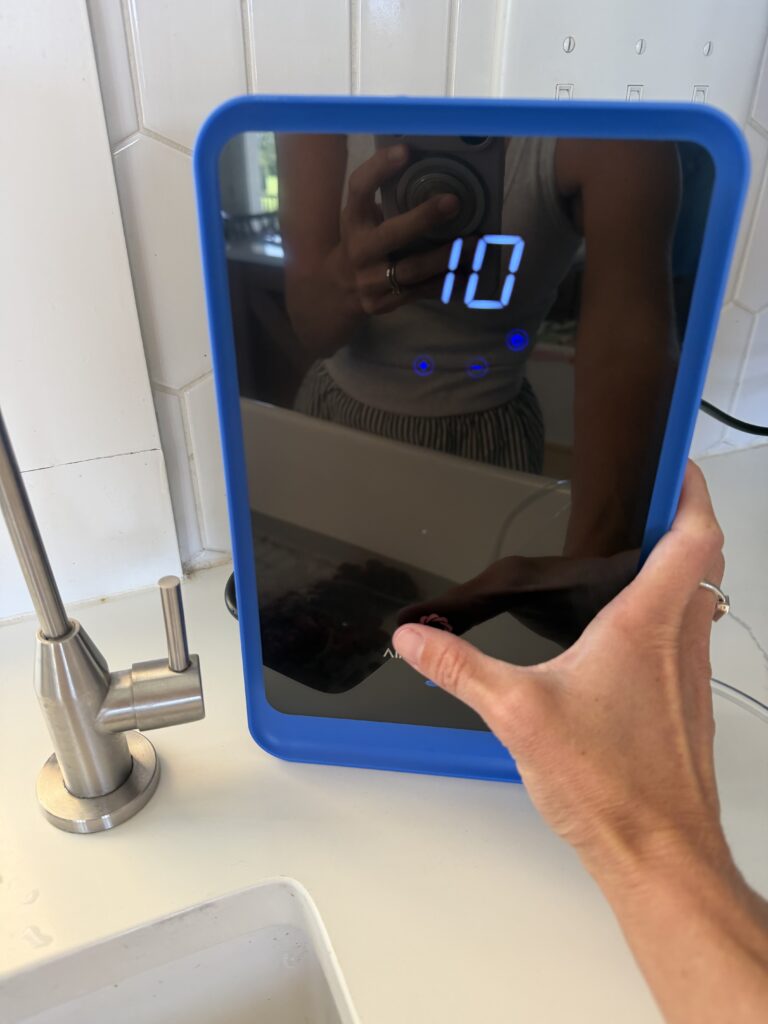
This is the exact model we have, use and love in our home.
The Honest Bottom Line
This machine started in my kitchen as a produce-washing tool, and it’s stayed in regular rotation for so much more: real odor elimination done correctly, a role in our water purification routine, and general support for indoor air quality. It’s not a magic fix for every single household concern (nothing is), but for what it actually does, and does well, it’s one of the more genuinely useful, multi-purpose tools I own.
If you’re working on the rest of your home with this same kind of intentional thinking, real tools, real reasoning, that’s exactly what the Kitchen and Living Spaces modules inside The Intentional Home walk you through, room by room. And if you want to start smaller with first steps, 7 Days to a Less Toxic Home is a completely doable place to begin, one habit a day, no overwhelm.
